highres.jpg)




| Care Tips |
| Wash your garments every day in cold water.
Air dry or tumble dry on cool setting. Never use bleach or fabric softeners. Use a drawstring bag to prevent snags. |
| We Recommend |
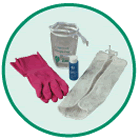
Care Accessory Package |
While these guidelines are provided for customer benefit and by a professional in the field, your personal care is always best managed by a medical professional familiar with your personal condition. If any of these guidelines conflict with your therapist's or doctor's advice, by all means, ignore us and do what they say! You should also never decide for yourself what kinds or size garments you need without consulting a professional. We strive to assist patients and therapists in obtaining the products they need, but we cannot diagnose, or even measure your need for you in place of a trained therapist. If your therapist has told you what size you need, great - order it here. If you have a garment and need to reorder, even better. But don't guess at what kind or size garment you need. Your health is too important for that!
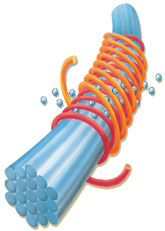
The high performance fabrics and finishes of your garment allow the fabric to breathe and take moisture away from the skin to the outer surface of the fabric.
Daily washing is necessary to prolong the life of garments. Oils and salts from your skin can break down the fibers. Wash in cold water with a detergent that does not contain bleach. Bleach will break down the fibers of your garment and shorten its useful life. Do not use Woolite, it contains bleach. Do not use fabric softeners as the "fatty" material in the softener attaches to the fabric. The fabric feels softer, but it builds up over time and reduces the ability of the fabric to manage moisture and breathe. Air dry your garments or tumble dry on cool. Some manufacturers recommend machine washing, others require hand washing to maintain the guarantee. See your sleeve box for specifics.
 Garments older than six months should be replaced. They will no longer have the original compression and may not be providing the valuable medical therapy you need. Medical bills for improperly treated swelling will cost you more than effective garments!
It is most effective to have more than one garment. All garments tend to lose some of their elasticity during daily wear. Alternate your garments to allow the elasticity to recover and prolong their effectiveness. To encourage you, we offer free shipping on order $75 and more!
Generally, sleeves and stockings are worn from first thing in the morning until bedtime. Stocking or sleeves should always be worn when exercising.
If you feel it is necessary to take a break from compression during the day, always elevate the limb so that swelling stays under control.
If swelling does not go away during the night, "night compression" may be necessary. It is recommended that sleeves and stockings not be worn at night, as they can roll down and constrict. Ask your therapist about night compression, e.g. CircAid, ReidSleeve, and bandanging.
If you have difficulty getting your garment on, ask about fitting gloves, Alps silicone, Donners and Slippies. See our accessories section for helpful application and care items.
Inside each garment box you will find wearing and washing instructions. Read these immediately.
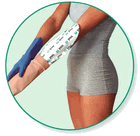 To make it easier to put on your garment, start early in the morning before your feet hit the ground. Your arm should be dry. The use of fitting gloves is recommended to make the process easier. Slide the folded sleeve over the hand and then milk the sleeve up the arm. Try not to let the sleeve bunch up at the elbow. Donning aids such as slippies and donning gloves can make the process easier.
Take your time! Never pull from the top. Spread the sleeve evenly, working upwards a little at a time. When adjusting the garment, always fold the top down and work up. Finish by smoothing out any wrinkles.
When removing the garment, never roll your sleeve down. Always peel down to the elbow and milk off the hand.
LympheDivas fashion armsleeves and gauntlets are now available in dozens of new patterns!


 239-213-9458
 info@medicalstockingsonline.com


 Email store
 Checkout
 View Order Status