highres.jpg)




The average adult’s body contains five quarts of blood. It flows through the blood stream of the body every minute. Amazingly in 24 hours 1800 gallons of blood pass through the heart. Blood transports nutrition, oxygen, and other important substances and chemicals essential to your body, while taking waste products to the kidneys to be removed.
Problems with edema often come up because of trouble with the venous blood system or the lymph system. When the blood, for whatever reason, cannot be moved out of the legs properly, the result is usually edema or swelling in the ankles. After the swelling is in place the cells can’t get enough nutrition or oxygen. This is the beginning of infections, painful rashes around the ankles, discolored skin, enlarged veins, and eventually the skin tissue can die forming ulcers. The same result can happen when the lymph system is damaged.
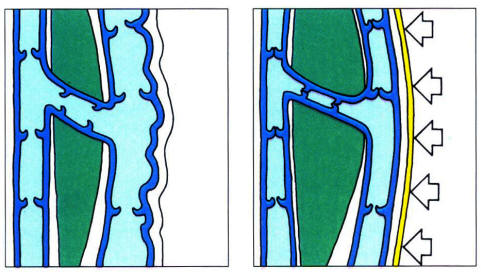
So why do graduated compression garments work? Quite simply blood flows faster in narrow blood vessels than in wide ones. Compression stockings narrow the veins forcing the blood to flow faster and more effectively. Tiny valves which prevent the blood from flowing backwards in the blood vessels are pushed closer together so that the whole system works better when you have your stockings or sleeve on.
Veins with valves that do not close Veins under compression therapy
Medical stockings and sleeves are designed to be strongest at the ankles or wrists, gradually reducing compression as they go up the leg or arm. This makes the stocking work against the forces of gravity.
The muscles of the body work with the stocking helping to pump the fluid out of the limb. That is why even simple exercise while wearing your stockings can work wonders.
*Important: We are smarter than to try to practice medicine without a license! The information presented on this site is for informational purposes only. New medical information is available weekly - so check with your doctor and therapist before making any changes to your treatment!
LympheDivas fashion armsleeves and gauntlets are now available in dozens of new patterns!


 239-213-9458
 info@medicalstockingsonline.com


 Email store
 Checkout
 View Order Status